|
Getting your Trinity Audio player ready... |
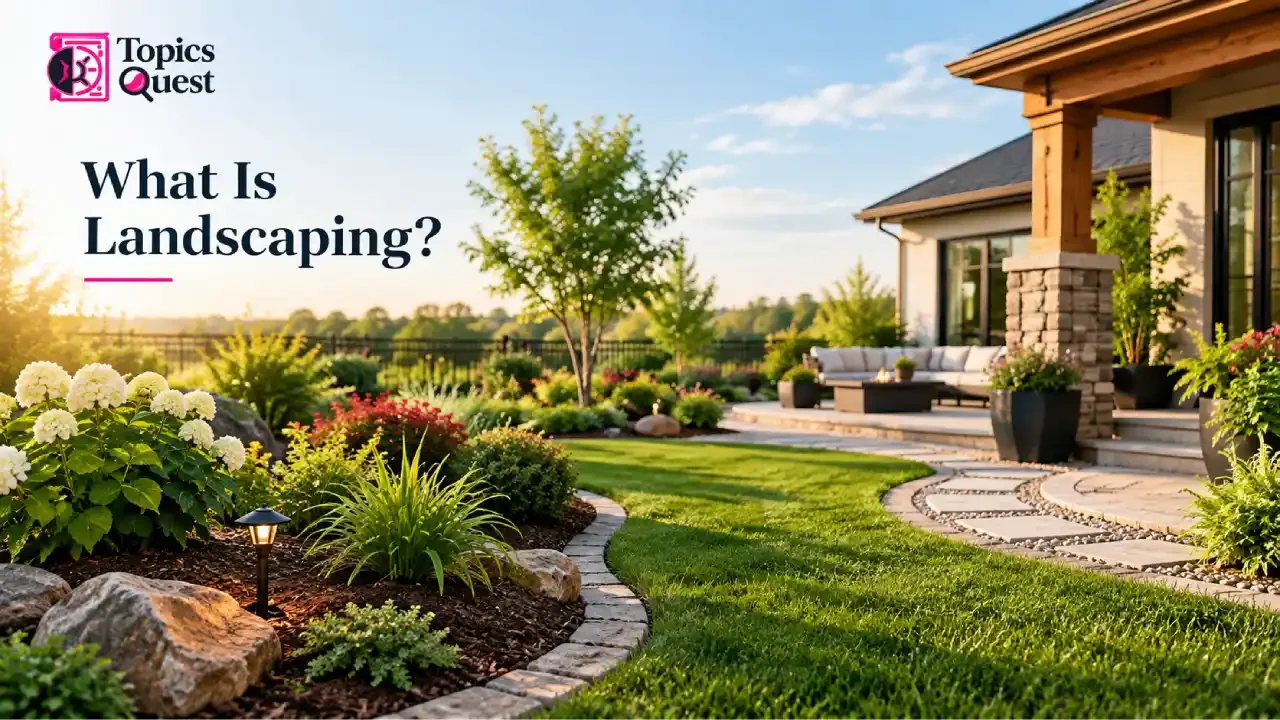
What is landscaping? Landscaping represents the professional art and scientific process of modifying the visible features of an area of land to enhance its aesthetic appeal and functional design. This comprehensive discipline involves seamlessly integrating living elements, such as vegetation and flora, with constructed structural features to create a harmonious outdoor environment. By combining horticulture, architectural planning, and environmental science, professional landscaping transforms standard properties into optimized, beautiful, and highly functional outdoor living spaces. Before launching a landscaping company, entrepreneurs should research applicable business licenses and permits, which vary according to business activities and location.
The Basics of Landscaping and Landscape Design
Understanding what is landscaping begins with exploring the strategic conceptualization of an outdoor environment. At its core, landscape design serves as the foundational blueprint for any successful outdoor transformation. A well-designed landscape harmonizes the natural environment with human use, creating spaces that invite relaxation, facilitate recreation, and improve the overall aesthetic of a property. The primary goal of any landscaping endeavor is to optimize the available space, ensuring that every distinct element serves a specific, constructive purpose.
A successful landscape project requires meticulous landscape planning. Professionals evaluate the existing design, assess soil quality, and map the terrain to create a cohesive design plan. This process incorporates fundamental design principles such as proportion, transition, unity, and rhythm. By applying these principles, a professional landscaper crafts a functional outdoor area that significantly boosts curb appeal and provides long-term value. Whether designing a compact urban courtyard or a sprawling rural estate, good landscaping relies on a deep understanding of spatial dynamics and natural ecosystems.
When property owners seek a guide to landscaping, they quickly discover that the discipline is divided into distinct phases. The conceptual phase involves understanding the lifestyle needs of the homeowner, followed by schematic designs that map out spatial relationships. Construction documentation follows, providing exact specifications for materials and plant placement. This thorough approach ensures that the final space design precisely matches the initial vision, creating a seamless transition from indoor living to the outdoor environment.
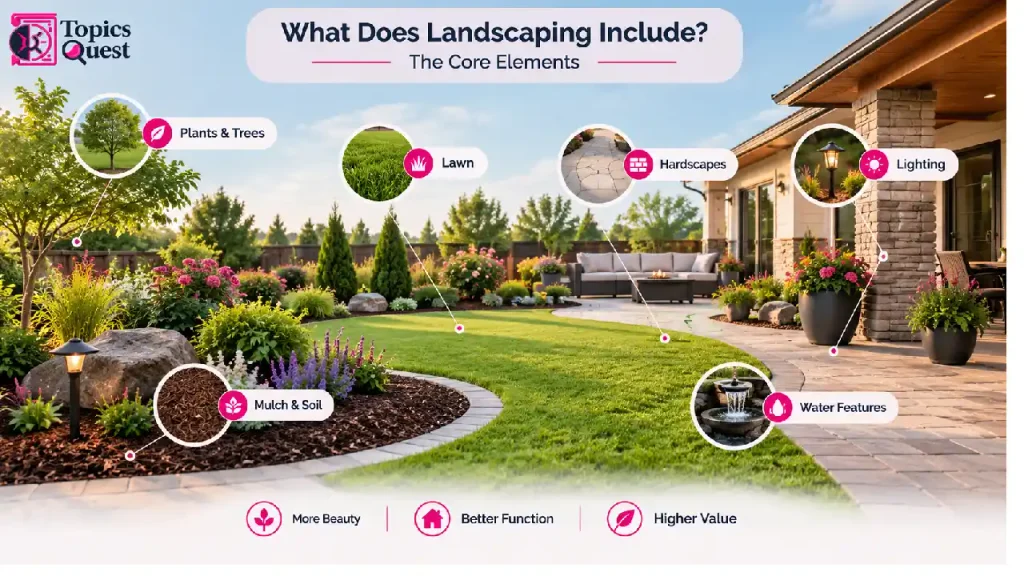
What Does Landscaping Include? The Core Elements
Detailing what does landscaping include reveals a multi-faceted discipline categorized into two primary domains: softscape and hardscape. A balanced integration of these elements defines successful space design and ensures the longevity of the installation.
Softscape: The Living Landscape
Softscape refers to the living, horticultural elements of a landscape. This category includes every plant, flower, shrub, and tree integrated into the environment. Softscaping focuses on the selection, installation, and care of vegetative components that breathe life into an outdoor space.
Soil management serves as the absolute foundation of softscaping. Excellent soil quality dictates the success of any botanical installation. Professionals utilize organic compost, specialized soil conditioner, and balanced fertilizer to ensure plants receive optimal nutrient delivery. The natural environment relies on this rich foundation to support healthy root systems and vibrant foliage.
The integration of a healthy lawn often serves as the green canvas for the entire garden design. Grasses, primarily belonging to the Poaceae family, require specific care, proper irrigation, and regular maintenance to thrive. Lawn care involves more than just routine cutting; it encompasses aeration, overseeding, and advanced horticulture techniques to maintain a lush appearance year-round.
Plant selection plays a pivotal role in creating a sustainable ecosystem. Planting trees and shrubs adds vertical interest, shade, and structural boundaries to a property. Integrating native plants and native species ensures that the vegetation adapts well to the local climate, requiring less water and displaying higher natural resistance to regional variations. The inclusion of dynamic flower beds and raised-bed gardening introduces vibrant colors and rich textures. Gardening and landscaping intersect closely here, as maintaining these beds requires ongoing expertise in proactive weed control and seasonal pruning. Every leaf and stem contributes to the overarching design, making the softscape a dynamic, ever-evolving entity.
Hardscape: The Structural Foundation
Explaining what is hardscape landscaping involves detailing the non-living, constructed features that provide shape, accessibility, and structure to an outdoor space. Hardscaping elements are essential for creating highly functional outdoor living spaces and managing the physical terrain.
- Patios and Walkways: A well-constructed patio serves as a central hub for outdoor living, while a thoughtfully placed walkway guides movement smoothly through the garden. These elements utilize materials ranging from natural flagstone to poured concrete, providing durable surfaces for recreation and dining.
- Retaining Walls: A retaining wall provides essential terrain management, transforming sloped properties into usable flat terraces while securing the earth. These structures combine engineering with aesthetic appeal, often utilizing interlocking blocks or natural boulders.
- Architectural Structures: Additions like a pergola, an outdoor kitchen, or custom seating areas extend the functional footprint of a home into the outdoors. These hardscape features create dedicated zones for entertainment and relaxation.
- Lighting: Professional landscape lighting extends the usability of the garden into the evening hours. Strategic illumination highlights architectural features, enhances safety along walkways, and creates a warm, welcoming ambiance.
Water Management, Drainage, and Irrigation
Proper water management represents a critical component of any professional landscape. Grading the land effectively ensures that rainwater flows safely away from foundational structures and toward an appropriate storm drain or natural catchment area. This careful terrain alteration protects both the softscape and hardscape investments.Property owners can improve water efficiency by considering soil conditions, selecting appropriate plants, and following recommended water-smart landscaping practices
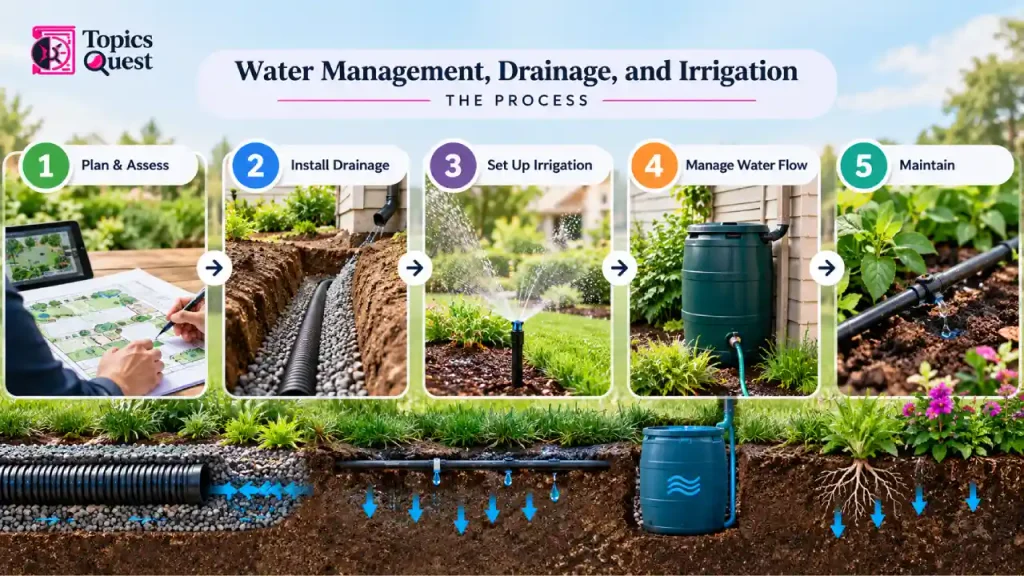
Keeping plants optimally hydrated requires highly efficient irrigation. The installation of an automated irrigation system, utilizing targeted irrigation sprinkler technology, ensures that softscape elements receive precise hydration while conserving valuable water resources. Furthermore, incorporating custom water features, such as a reflecting pond or a cascading waterfall, introduces a calming, sensory element to the landscape design.
Different Types of Landscaping Styles
The landscaping industry offers various design styles tailored to different climates, aesthetic preferences, and maintenance capacities. Reviewing these different types of landscaping helps property owners choose the best fit for their outdoor environment.
Traditional Landscaping Traditional landscaping emphasizes symmetry, manicured lawns, and classic plant varieties. It often features geometric garden beds, neatly pruned shrubs, and a highly structured aesthetic. This style provides timeless elegance and remains a hallmark of formal residential landscaping.
Modern Landscaping Modern landscaping focuses on clean lines, geometric minimalism, and the strategic use of hardscape features. Industrial materials like concrete, steel, and uniform stone are frequently paired with striking, architectural plants. This approach creates an uncluttered, sophisticated outdoor area that complements contemporary home architecture.
Tropical Landscaping Tropical landscaping utilizes lush, oversized foliage, bold colors, and dense planting strategies to replicate a vibrant resort-like atmosphere. While beautiful, this style thrives best in specific warm climatic conditions or requires dedicated landscape maintenance to sustain the exotic plants in cooler regions.
Sustainable and Natural Landscaping Sustainable landscaping prioritizes environmental stewardship and ecological harmony. Natural landscaping techniques encourage local biodiversity by relying heavily on native plants and organic cultivation methods. This approach minimizes the need for chemical applications and excessive watering, supporting a healthier local ecosystem and acting to naturally improve air quality.
According to the U.S. Department of Energy, water-efficient landscaping using native and climate-appropriate plants can reduce irrigation requirements and maintenance needs.
Xeriscape Landscaping For arid regions and environmentally conscious property owners, exploring what is xeriscape landscaping provides an excellent, highly efficient solution. Xeriscaping focuses on drought-tolerant plants, extensive use of gravel and rocks, and minimal turf grass to drastically reduce water consumption. A typical xeriscape garden design utilizes succulents, native desert shrubs, and efficient drip irrigation to maintain a vibrant, textural landscape with minimal hydration. Xeriscaped yards can reduce irrigation needs by 50%, saving precious water resources in dry regions.
Professional Landscaping Services
When individuals ask what is landscaping work, professionals describe a broad, dynamic spectrum of design, installation, and maintenance tasks. Determining what services do landscaping companies offer helps property owners understand the immense value of professional intervention.
Design and Construction Services Landscape architecture and professional design represent the vital first phase of significant projects. A landscape architect provides detailed blueprints, 3D conceptual renderings, and thorough environmental assessments. Following the intricate design phase, landscape construction projects bring the vision to life. This encompasses heavy machinery operation, precise hardscape installation, and large-scale planting. Public green spaces, such as Minnehaha Park (Minneapolis), showcase highly effective landscape planning on a grand scale, while boutique regional firms, similar to Minnehaha Falls Landscaping, adapt these expansive, magnificent techniques for private residences.
Landscape Maintenance Services Long-term maintenance ensures that the landscape matures beautifully over the years. Routine maintenance of outdoor spaces includes tasks to mow the turf, prune the trees, apply appropriate fertilizer, and monitor the health of irrigation systems. Identifying what are landscaping services in the maintenance sector clarifies the ongoing commitment required to preserve the integrity of the design. Dedicated maintenance services manage seasonal cleanups, soil aeration, and proactive plant healthcare.
To fully answer what do landscaping companies do, one must review this complete lifecycle—from initial concept and space design to the daily tasks executed by a skilled technician. Hiring a professional landscaper provides access to extensive industry experience, specialized commercial equipment, and deep horticultural knowledge.
The Financial Landscape: What Does Landscaping Cost in 2026?
Property owners frequently inquire what does landscaping cost before initiating a project. Estimating what is the cost of landscaping involves analyzing the project scope, material selection, geographic location, and labor rates. Calculating what is the average landscaping cost relies on aggregating current market data for both softscape and hardscape installations.
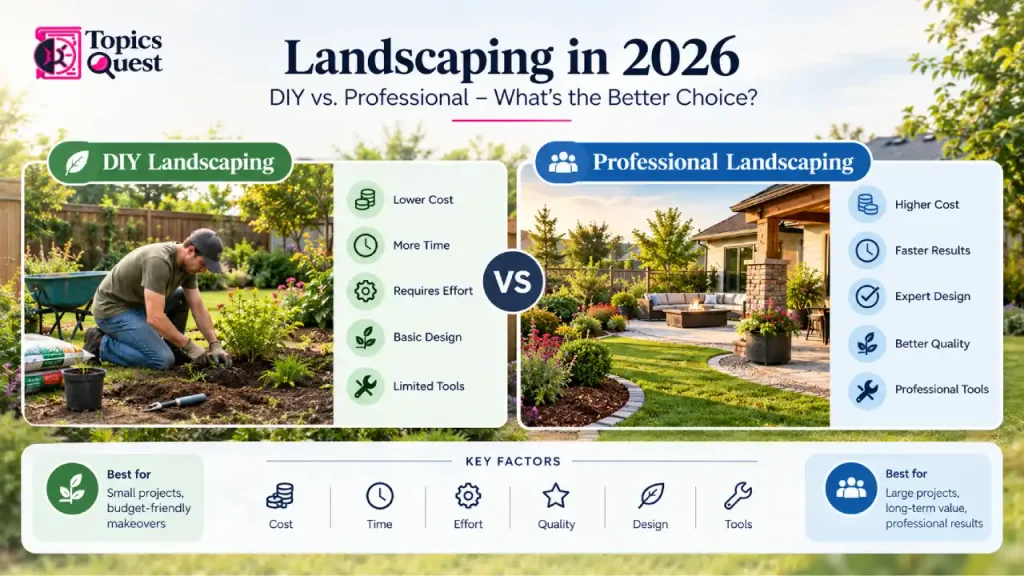
In 2026, professional landscaping costs a national average of $3,516. However, this figure fluctuates significantly based on the exact scale of the transformation. Evaluating what is the average cost of landscaping ensures property owners can budget effectively for their specific functional goals.
Cost Breakdown by Project Size and Area
The total square footage of the outdoor space serves as the primary determinant for overall costs. General landscaping typically costs between $4.50 and $12.00 per square foot, with highly customized tear-out and remodel projects reaching higher investments.
| Landscaping Area Size (Square Feet) | Average 2026 Cost Range |
| 200 sq. ft. | $900 – $2,400 |
| 500 sq. ft. | $2,250 – $6,000 |
| 1,000 sq. ft. | $4,500 – $12,000 |
| 2,000 sq. ft. | $9,000 – $24,000 |
Understanding what is the average cost of landscaping a front yard helps homeowners budget for immediate exterior enhancements. A standard front yard landscape project—incorporating fresh sod, nutrient-rich mulch, and attractive border plants—typically ranges from $1,500 to $5,000. In contrast, complete backyard renovations involving complex design and construction, such as installing a patio or an outdoor kitchen, can range from $15,000 to $50,000.
Material and Installation Costs
Material costs represent a major variable in any landscaping budget. Selecting the right materials allows homeowners to balance initial investment with long-term durability.
| Landscaping Material / Service | Average 2026 Cost |
| Sod Installation | $0.35 – $0.85 per square foot |
| Topsoil Delivery | $12 – $55 per cubic yard |
| Rocks or Gravel | $40 – $100 per cubic yard |
| Mulch Installation | $30 – $120 per cubic yard |
| Retaining Wall Blocks | $3 – $40 per square foot |
| Pavers | $1 – $25 per square foot |
| Tree Planting | $120 – $2,500 per tree |
| Patio Installation | $2,000 – $5,800 total |
Xeriscaping Costs in 2026
Due to the highly specialized materials and specialized drought-resistant plant requirements, xeriscaping carries distinct pricing models. Xeriscaping costs approximately $5 to $20 per square foot. For a standard 1,200-square-foot yard, a comprehensive xeriscape installation averages around $17,000 nationwide.
| Xeriscaping Project Size | Average Overall Cost |
| 500 sq. ft. | $3,500 – $9,165 |
| 1,000 sq. ft. | $7,000 – $18,330 |
| 1,250 sq. ft. | $6,250 – $25,000 |
| 1,500 sq. ft. | $10,500 – $27,500 |
While the initial investment for xeriscaping may appear substantial, the long-term maintenance costs and incredible water savings make this a highly economical and environmentally responsible choice over time. Drought-tolerant ground covers, which function like natural mulch to shade the soil and retain moisture, cost between $2 and $45 per plant, offering excellent long-term value.
Starting a Landscaping Business
Entrepreneurs researching what do you need for a landscaping business focus heavily on licensing, commercial equipment acquisition, and market positioning. Reviewing what to know when starting a landscaping business sets a robust foundation for sustainable employment, corporate growth, and excellent service delivery.
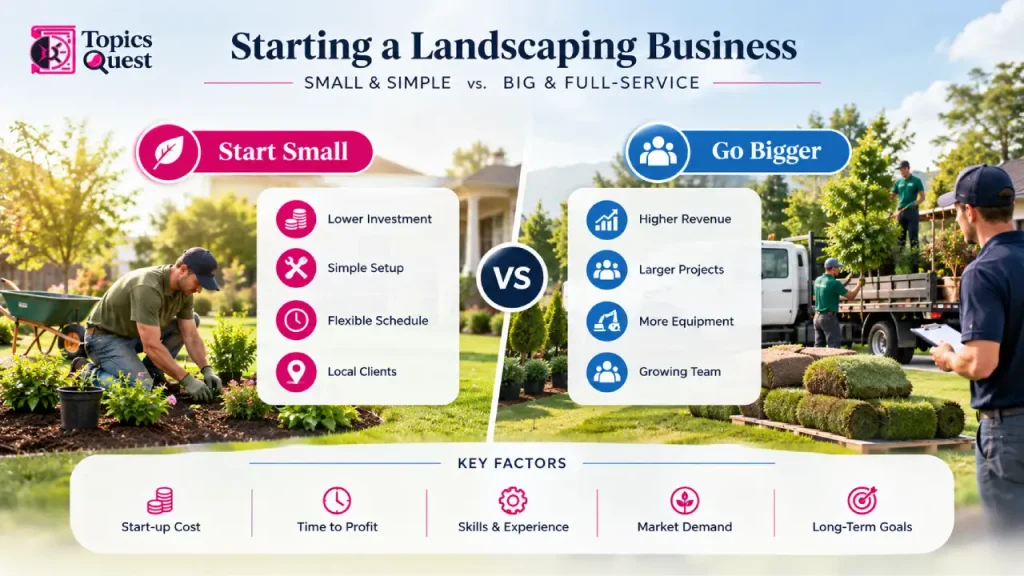
A successful landscaping enterprise requires a refined blend of horticultural knowledge and sharp business acumen. The initial steps involve structuring the company legally, acquiring comprehensive commercial insurance, and securing all necessary local operating licenses. Following the legal and administrative setup, establishing reliable commercial transportation and building a robust supply chain for bulk materials (such as soil, mulch, and stone) is highly essential.
Essential Tools and Equipment
Listing what tools are needed for landscaping assists a new technician in preparing for efficient daily operations. The specific equipment required scales naturally with the distinct types of landscaping services offered by the firm.
| Equipment Category | Essential Tools Included |
| Basic Maintenance | Commercial mowers, string trimmers, leaf blowers, edgers |
| Hand Tools | Shovels, rakes, pruning shears, wheelbarrows, hand trowels |
| Turf Management | Core aerators, dethatchers, heavy-duty spreaders, sprayers |
| Heavy Construction | Skid steers, mini-excavators, trenchers, plate compactors |
Pricing Strategy and Labor Rates
Professionals determining what to charge for landscaping evaluate their total operational overhead, localized labor costs, and ongoing material expenses. Landscaping companies typically price their valuable services through detailed flat-rate project bids or hourly labor charges. In 2026, general landscaping labor averages between $50 and $100 per hour, while specialized landscape architects and senior designers may charge between $70 and $150 per hour depending on the complexity of the design plan. Offering tiered, structured maintenance packages or specialized services, such as smart irrigation optimization or custom lighting installations, allows companies to diversify their revenue streams and appeal to a much broader client base.
Strategic Planning for Long-Term Success
Whether a homeowner is seeking to create a landscape from scratch, or an entrepreneur is looking to launch a new service firm, understanding the interplay between living flora and structural materials is paramount. Landscaping represents a powerful intersection of nature and design, offering immense benefits for property value, environmental health, and personal well-being. By utilizing professional expertise, investing in high-quality materials, and prioritizing sustainable practices, individuals can cultivate outdoor environments that thrive beautifully for generations.