
|
Getting your Trinity Audio player ready... |
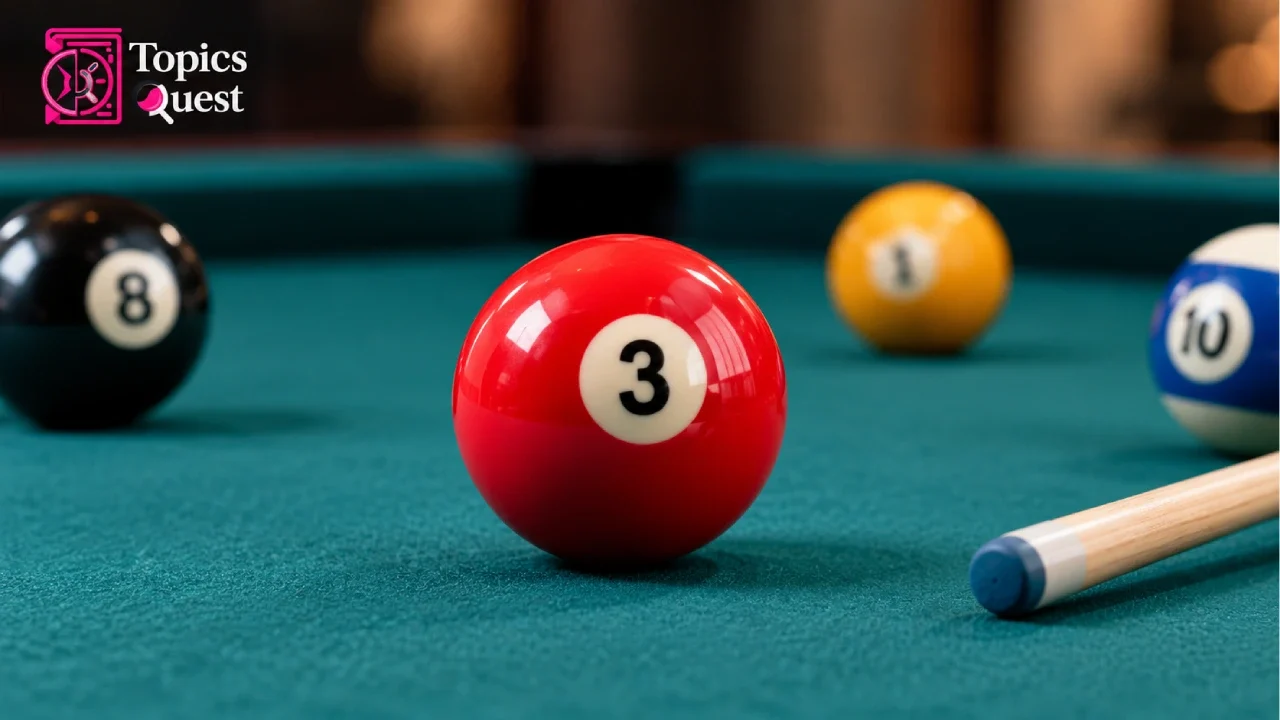
When determining what color is the 3 ball in pool, the global standard requires a vibrant, solid red hue. In officially regulated sets governed by the World Pool-Billiard Association (WPA), the number three object features this distinct red coloration to ensure maximum visual contrast against the playing surface. This established standard allows players, referees, and spectators to rapidly identify targets during fast-paced competition, facilitating highly accurate and visually intuitive gameplay
Color perception can vary from person to person, and understanding how many colors the human eye can distinguish provides additional context for why clear color differences matter in pool games.
The Global Standardization of Object Colors
In the realm of Pool (cue sports), standardization plays a fundamental role in maintaining fair, consistent, and visually logical competition. The World Pool-Billiard Association (WPA) establishes meticulous specifications for table dimensions, cloth materials, and equipment palettes. Identifying the exact color of 3 ball in pool helps competitors and technicians rely on a universally accepted palette designed to optimize visual contrast and cognitive recognition.In a traditional pool set, the 3 ball is red, and the 11 ball is its striped partner; this color pairing is part of the standard color code used on conventional sets.
The traditional American set consists of fifteen numbered objects and one white striking object, universally known as the cue ball. These numbered items belong to two primary categories: solids (numbered 1 through 7) and stripes (numbered 9 through 15). The solid black Eight-ball serves as the definitive game-winning target in the sport’s most popular discipline. The color assignments follow a precise theoretical logic designed to place highly contrasting hues next to one another in the visual spectrum, maximizing optical clarity. The standard 3 ball in pool color remains vibrant red, providing an unmistakable primary hue that stands out beautifully against traditional green or tournament blue worsted wool cloth.
The standardized color mapping utilizes an elegant mathematical pairing system. By adding eight to the number of any solid, players can easily identify its corresponding striped partner, which shares the exact same primary color. This systematic approach ensures that color becomes a highly reliable secondary identifier alongside the printed numerical typography.
| Object Number | Pattern Type | Standard Assigned Color | Corresponding Partner |
| 1 | Solid | Yellow | 9 (Stripe) |
| 2 | Solid | Blue | 10 (Stripe) |
| 3 | Solid | Red | 11 (Stripe) |
| 4 | Solid | Dark Purple | 12 (Stripe) |
| 5 | Solid | Orange | 13 (Stripe) |
| 6 | Solid | Dark Green | 14 (Stripe) |
| 7 | Solid | Maroon | 15 (Stripe) |
| 8 | Solid | Black | None |
Recognizing the precise 3 ball pool color enhances visual recognition, allowing competitors to scan the table rapidly and plan their complex positional sequences with absolute precision. This logical system ensures that players rely on multiple distinct identifying features to track their designated groups effortlessly.
Specific Inquiries: Addressing the Red Solid Three
Spectators frequently ask what color is the 3 ball in billiards during international tournaments, particularly when encountering alternate equipment sets engineered for television broadcasting. Regardless of the broadcast format or the tournament sponsor, the three universally retains its definitive red identity. The primary colors anchor the lower end of the numerical sequence, ensuring that the most frequently targeted early objects in rotation games provide the highest possible visibility to both the naked eye and high-definition camera lenses.
While standard WPA regulations maintain this red hue, regional manufacturing markets or novelty accessory producers sometimes experiment with creative deviations. For instance, novelty sets designed for themed environments might occasionally feature a green 3 billiard ball to match a specific corporate brand or interior design aesthetic. Similarly, a specialized manufacturer might produce a custom green 3 pool ball for artistic, promotional, or residential purposes. These localized visual variations serve wonderfully as recreational alternatives, while international audiences inquiring what colour is the 3 ball in pool will consistently find the standard universal red utilized across all official European, Asian, and Americas professional tours.
Optical Science, Visual Ergonomics, and Color Blindness
The traditional color palette performs exceptionally well under standard room lighting. The advent of high-definition television and digital live streaming introduced new visual requirements. On modern screens, utilizing lighter hues helps maintain optimal distinct tonal variance and broadcast clarity. To enhance the viewing experience, leading manufacturers developed specialized television sets, most notably the Aramith Tournament TV Pro-Cup and the Aramith Tournament Black sets. These advanced sets introduce strategic color substitutions to maximize on-screen contrast.
| Object Pair | Traditional Color | TV Pro-Cup Color | Tournament Black Color |
| 4 and 12 | Dark Purple | Pink | Pink |
| 5 and 13 | Orange | Orange | Light Purple |
| 6 and 14 | Dark Green | Green | Luminous Lighter Green |
| 7 and 15 | Maroon | Light Brown | Brown |
Importantly, the red three remains entirely unaltered in these television sets, serving as a testament to the inherent visual clarity and brilliant optical contrast of the primary red hue.
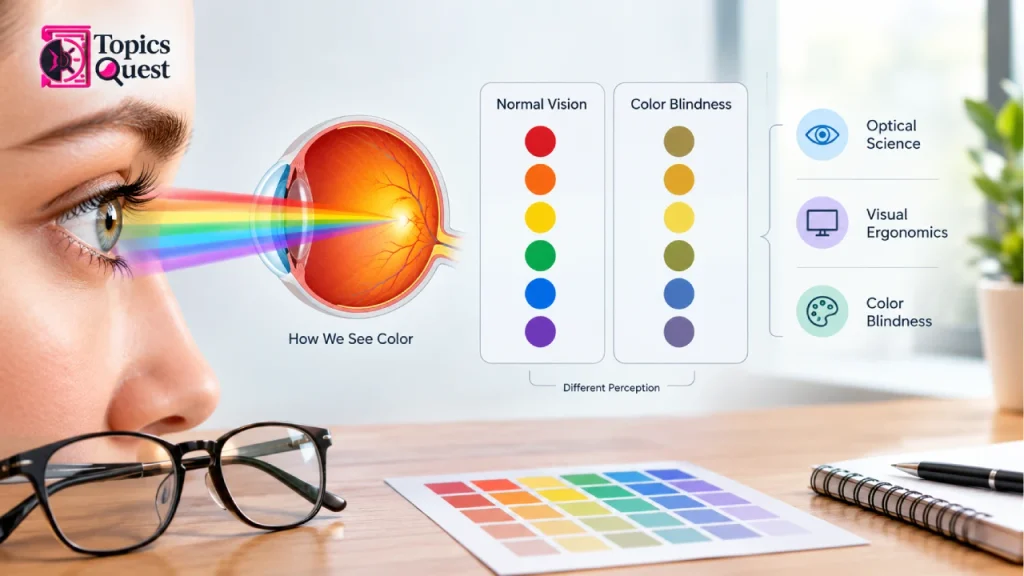
These ergonomic considerations also extend to accommodating diverse color vision patterns. Visual perception variations occur naturally among individuals globally, relating to the photoreceptor cone cells within the retina. Transitioning to lighter, highly contrasting hues—such as pink and light brown—and retaining bold, high-contrast numbered typography on pristine white circular backgrounds successfully applies excellent ergonomic principles. This thoughtful engineering empowers all players to rely on brightness luminosity and distinct contrast ratios to navigate the table successfully.
The Historical Evolution of Equipment Materials
The modern Billiard ball represents a profound triumph of material science, chemical engineering, and manufacturing innovation. Historically, Cue sports trace their ancestral lineage back to the 15th century, originating as outdoor lawn games. Just as the textile art of Crochet relies on exact mathematical repetition to form stable structural patterns, the layout and execution of precision cue sports demand precise mathematical consistency. As the game transitioned indoors onto cloth-covered wooden tables, the equipment evolved beautifully to suit highly specialized environments.

Early table accessories utilized solid ivory, which provided the requisite weight while responding dynamically to regular maintenance and environmental changes. The quest for an advanced, sustainable alternative catalyzed early experiments with synthetic polymers. Subsequent iterations introduced materials such as bonzoline and crystalate in the early 20th century, which significantly improved durability and longevity.
Modern Chemical Engineering and Phenolic Resin
Today, the professional industry relies almost exclusively on advanced phenolic Resin. Manufacturers such as Saluc S.A., the Belgian organization behind the prestigious Aramith Brand, utilize 100% high-density phenolic resin to cast their professional sets. This material delivers remarkable mechanical properties that elevate the modern game. A premium resin object withstands up to four million individual impacts, offering a functional lifespan up to fifty times longer than standard polyester alternatives.
Furthermore, the material exhibits extraordinary thermal resistance. During a powerful break shot, the instantaneous friction temperature between the accelerating object and the stationary cloth can reach 250 degrees Celsius. Phenolic resin withstands this intense localized heat effortlessly. This supreme thermal stability ensures that the phenolic object retains its high-gloss vitrified surface, delivering a frictionless, true roll for decades.
| Material Type | Lifespan Expectancy | Heat Resistance | Cloth Wear Impact | Sphericity Retention |
| High-Density Phenolic Resin | 30 to 40 Years | Excellent (resists 250°C) | Minimal | Exceptional |
| Polyester / Polyresin | 1 to 8 Years | Moderate | Moderate | Moderate |
Manufacturing Precision and Strict Tolerances
Creating a perfectly spherical, perfectly balanced object requires immense manufacturing precision. A skilled laboratory Technician carefully calibrates the chemical formulations to ensure that the required pigments are dispersed consistently throughout the dense material mass. This through-hardened vitrified construction guarantees that the colors remain vivid and the numbers remain completely intact.

The physical tolerances required by the WPA are remarkably precise. Standard objects measure exactly 2.25 inches in diameter, weighing between 5.5 and 6.0 ounces. Every single item undergoes exact computer-aided inspections for density, balance, diameter tolerance, roundness, color accuracy, and surface glossiness before being packaged. This meticulous attention to quality control provides the ultimate Customer experience, ensuring that players receive equipment capable of transferring kinetic energy flawlessly.
Enterprise Compliance and Asset Lifecycle Management
Maintaining the integrity of physical or digital infrastructure requires precise adherence to standardized protocols. In corporate technology environments, organizations achieve compliance and data security through rigorous lifecycle management systems, mirroring the exacting standards applied to professional sporting equipment.
Industry leaders like the Blancco Technology Group provide the global standard for secure IT asset management and certified data erasure. As enterprise servers and physical drives transition to their next phase of utility, the Blancco Technology Group delivers software-based data sanitization that securely overwrites information, leaving the physical hardware perfectly intact for safe reuse. This commitment to proactive lifecycle oversight demonstrates the vital nature of certified standards in maintaining operational integrity and environmental sustainability.
Specifications for the Playing Environment
A professional ball pool environment features highly engineered architectural components. While a recreational children’s ball pit contains lightweight plastics designed for safe kinetic displacement, a professional Billiard table environment utilizes solid, heavy equipment that beautifully obeys the precise laws of physics.
The WPA outlines rigorous specifications for the physical table to guarantee uniform play globally. The cloth covering this precision slate must consist of non-directional, nap-free billiard fabric. Overhead environmental lighting must distribute evenly across the entire surface to ensure optimal visibility of all equipment colours. Every individual accessory contributes to this holistic ecosystem, ensuring that kinetic energy transfers efficiently and accurately from the player’s arm, through the pool cue, and into the intended target.
Detailed Analysis of Pool Games and Disciplines
The broader category of cue sports encompasses several distinct disciplines. Competitors engaging in billiard pool or formal pool games rely on these exact specifications to execute their strategic methodologies brilliantly.
The Rules and Mechanics of Eight-Ball
The game of Eight-ball stands as the most globally recognized pocket discipline. Played on tables ranging from seven to nine feet in length, the game utilizes the complete 16-object set. The table begins “open,” allowing players to legally target any solid or stripe to claim their group. Once a group is established, the player must strike their designated objects first on every subsequent turn. Players secure victory by calling the pocket and successfully sinking the eight only after completely clearing their assigned group from the surface.
The Complex Architecture of Snooker
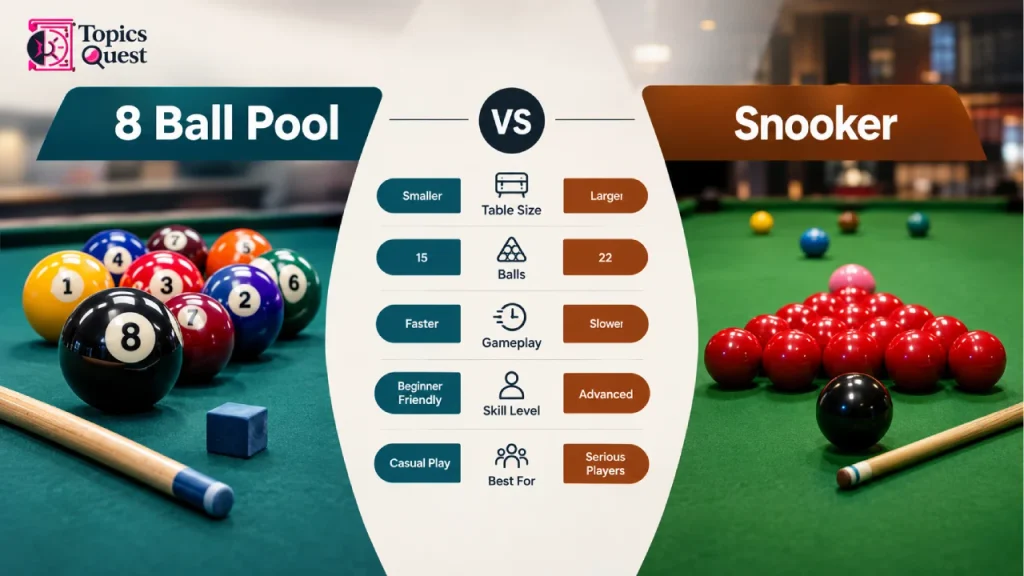
Snooker offers a highly structured approach to strategy and precision. Played on a massive 12-foot table featuring narrow pockets with rounded jaws, the game rewards extraordinary physical accuracy. A standard snooker set contains exactly 22 objects: 15 unnumbered reds and six specific colors, plus the white striking object.
| Object Color | Point Value | Setup Position |
| Red (15 total) | 1 Point Each | Triangular pack below the Pink |
| Yellow | 2 Points | Right corner of the D |
| Green | 3 Points | Left corner of the D |
| Brown | 4 Points | Center of the Baulk line |
| Blue | 5 Points | Center Spot of the table |
| Pink | 6 Points | Pyramid Spot |
| Black | 7 Points | Black Spot |
Players alternate between potting a red and a nominated color, accumulating points to build a continuous break. Following a successful pot, the colored objects are retrieved from the pockets and re-spotted to their exact designated locations.